
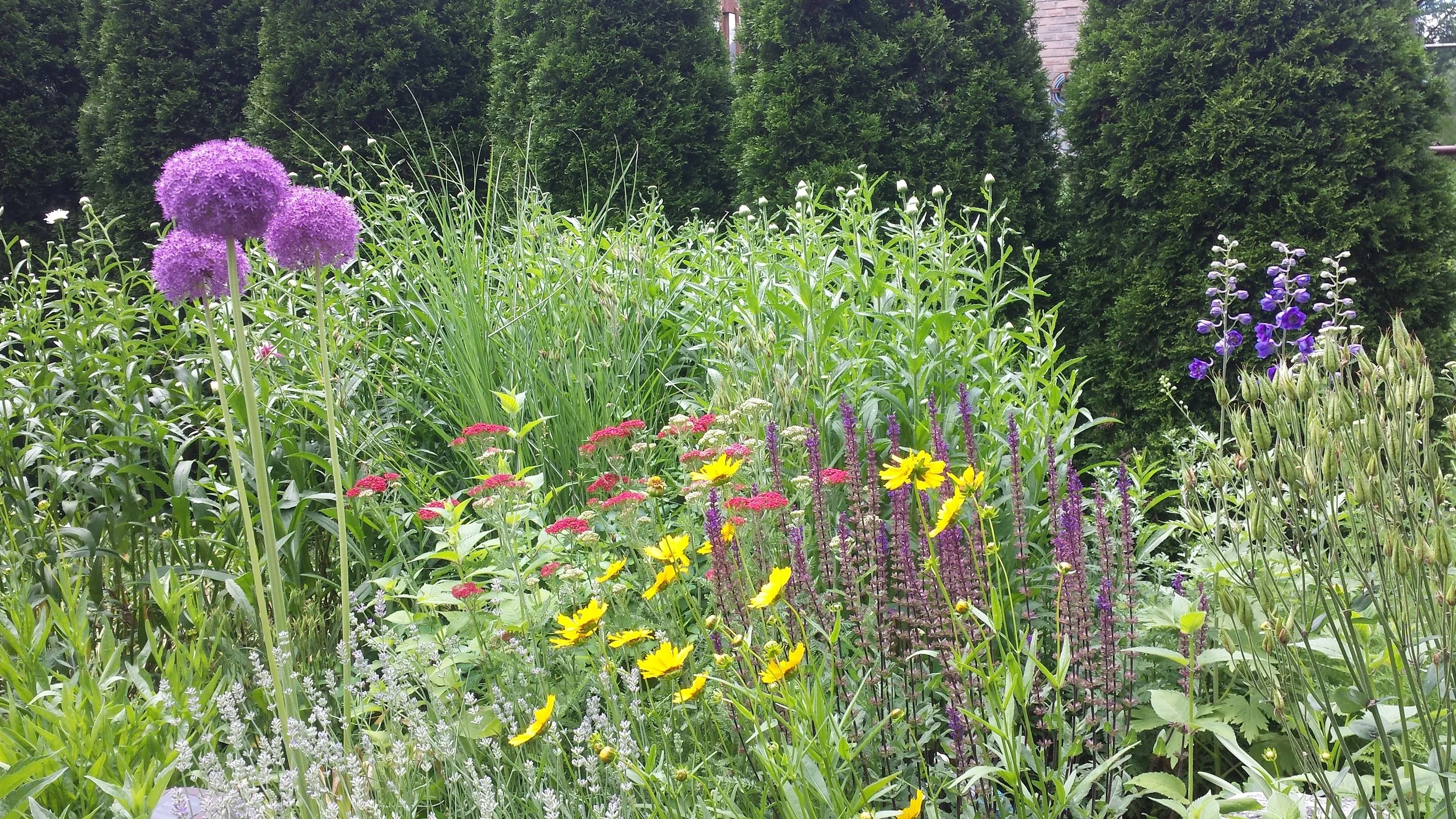

I started M.M. Natural Gardens to help Nature.
In my first few seasons of gardening
I idolized the perfectly manicured and grandiose gardens of European estates. Trying to replicate that look, I planted non-native plants and focused on aesthetics above all, in a vain and endless pursuit of the impossible ‘perfect’ garden.
I didn’t want to see a single leaf out of place or a single weed in my lawn!
But then I realized that the same thing was happening in gardens across the GTA, and across most of Canada and the USA! The same non-native plants and extensive areas of lawn and non-native hedges are being planted, in an attempt to replicate grand estate gardens, but on a smaller scale. These gardens may look neat but they are deceptive green deserts, devoid of life.
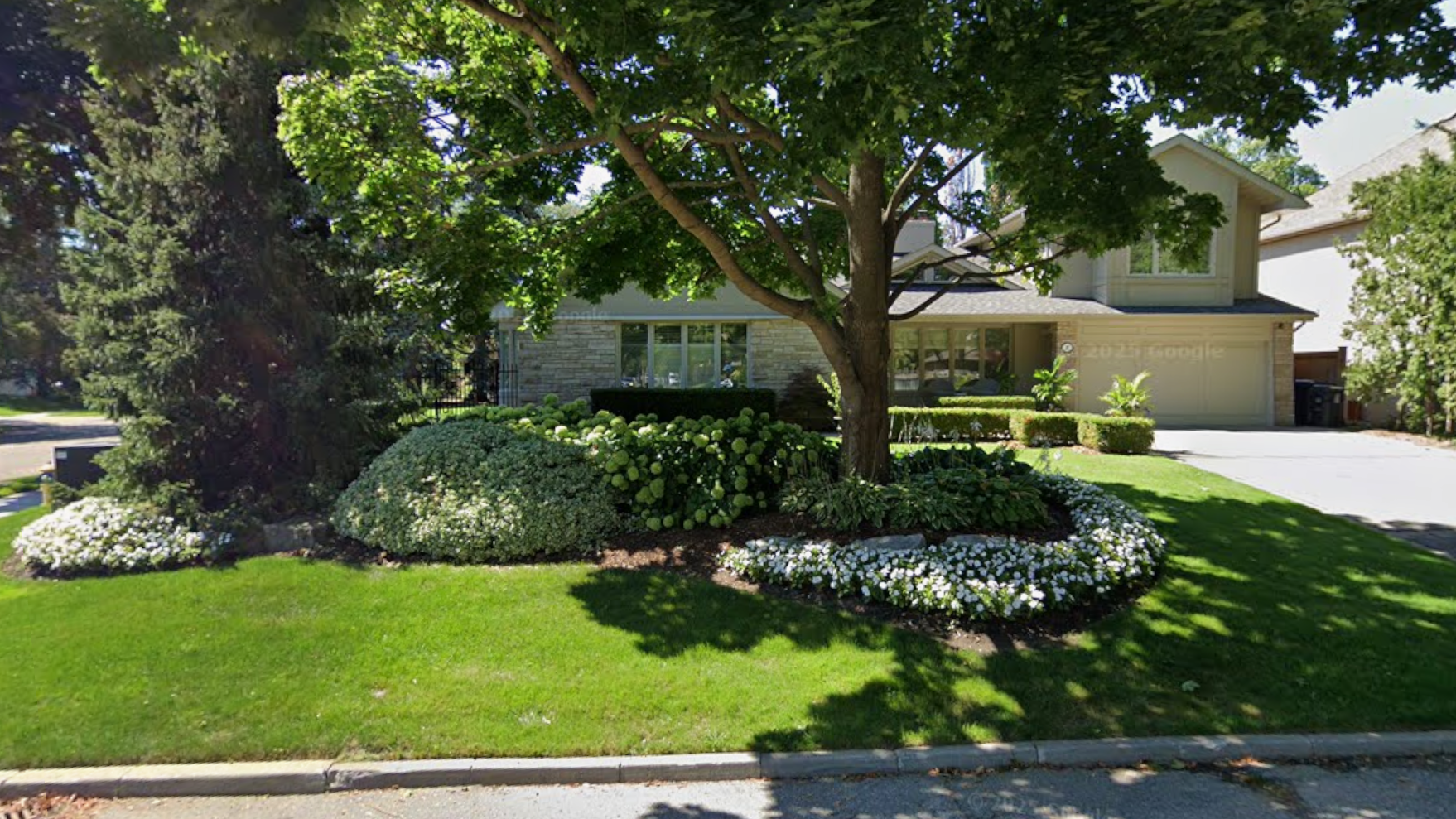
A typical modern suburban garden, featuring large areas of empty lawn and planted almost entirely with non-native plants (featuring the usual suspects: Yew, Boxwood, Euonymus, Hosta, Hydrangea, annual Impatiens, and a Japanese maple). The sugar maple tree and eastern white cedar hedge are the only natives in this garden.
This outdated and demanding style of gardening
is becoming more and more incompatible with our modern lifestyle and what our ecology requires.
It is actually creating a BIG problem for our wildlife. When most yards are planted without consideration for the ecology, there is less and less habitat available for the living beings trying to survive.
A large portion of the ‘plantable’ land in the GTA is in our own front and back yards, not parks or other natural areas (where invasives are also becoming a growing concern, displacing native plants and the wildlife they sustain).
Our yards offer us an opportunity to really make a difference, at a ‘grassroots’ level (pun definitely intended). The effects are cumulative: every garden that embraces Nature helps the ecology a little more.
Why are we fighting Nature?
We spend so much time, effort, and money maintaining this outdated and overused style of gardens, and creating unnecessary emissions from gas-powered machines in the process.
Do we truly need these ‘neat’, but fussy hedges, shrubs, and lawns? Sure, a small bit of lawn can be useful, as a play area, a path between planting areas, or a visual palate cleanser. But as a popular natural gardening saying goes: lawns should be treated as area rugs, not wall-to-wall carpeting.
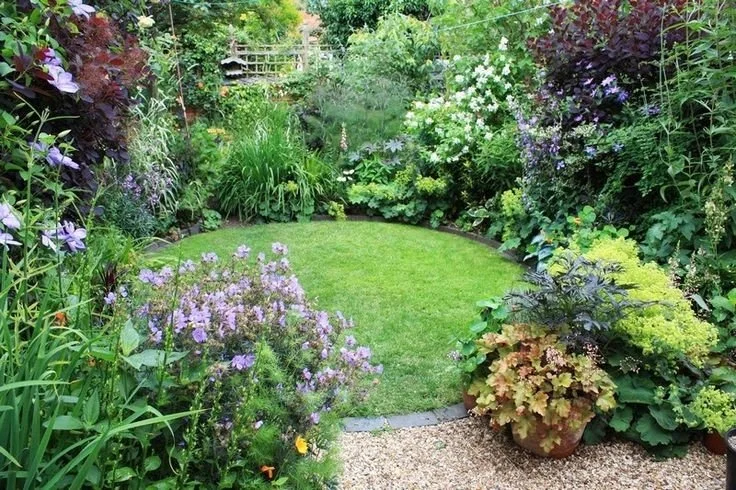
Great use of a small circular lawn as a destination and viewing platform. It also provides a place for the eye to rest and helps to define the plants surrounding it
When given a chance
Nature finds a way to balance itself, and ‘pest’ problems are usually solved in a natural way. For example, an aphid infestation will attract and feed ladybugs and their larvae, and they will keep the aphid population in check.
Why spray herbicides and pesticides and kill the living beings we should be protecting instead? I don’t believe it’s worth poisoning our ecology and fighting Nature for the sake of an impossibly ‘perfect’ lawn.
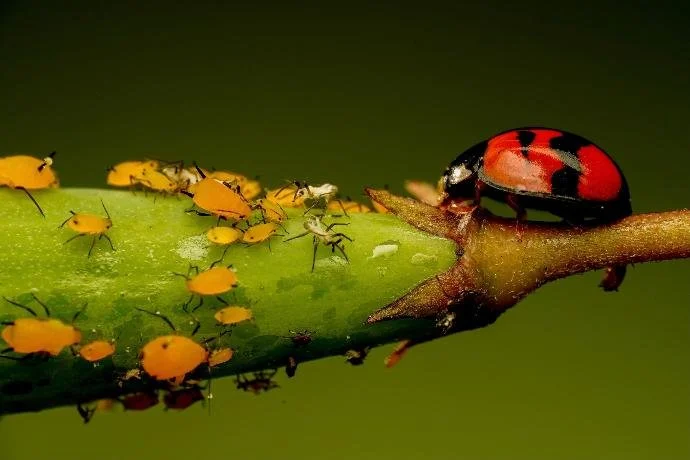
Ladybug enjoying an aphid buffet
Nature inspired me to make a change:
I started taking cues from Nature and looking at gardening in a more holistic way, and asking questions like: how can I help Nature and my local ecosystem? How do I balance aesthetics and ecological value to create a beautiful garden that supports biodiversity?
I still appreciate a clean garden that is visually organized and thoughtfully designed, but I started considering gardens as small areas of maintained Nature, rather than simply being a display case for plants and flowers.
Inspired by this new approach, in the last few years I started turning my own traditional, cottage style Etobicoke garden into a more natural garden, valuing biodiversity and ecological impact above all.
And in just a few seasons of adding native plants and managing the garden in harmony with Nature, the improvement has been dramatic! I began seeing many more different birds, butterflies, hummingbirds, fireflies, and other interesting wildlife.
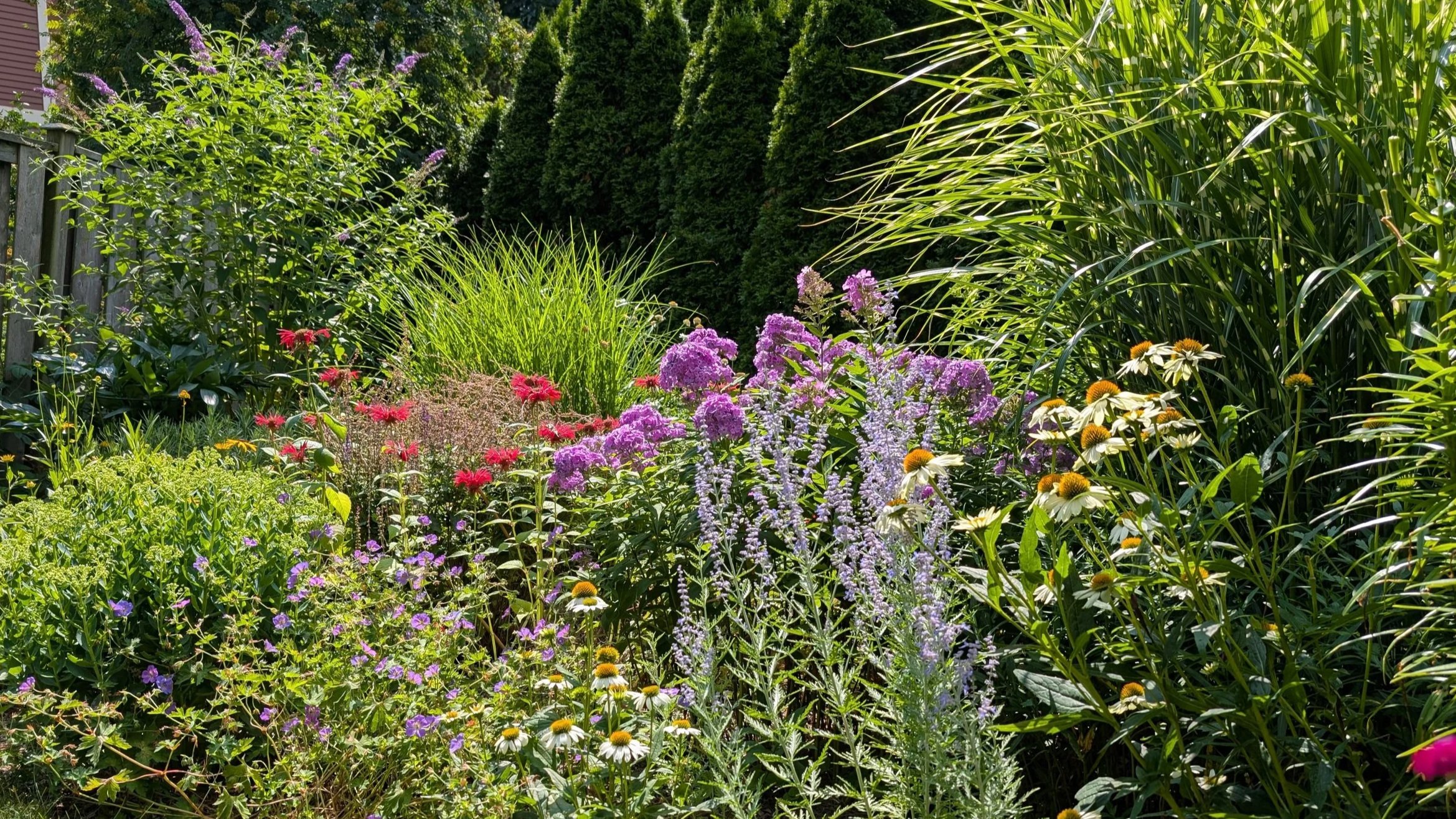
My own garden in mid-August
This convinced me that natural gardening is a very promising way to help our ailing ecology. And after more than 12 seasons of professional gardening, I moved on from my previous gardening company and started M.M. Natural Gardens.
I hope to inspire others to consider natural gardening, and enjoy the same benefits that I discovered in my own piece of Nature!
Thank you for reading. Please help Nature!

